
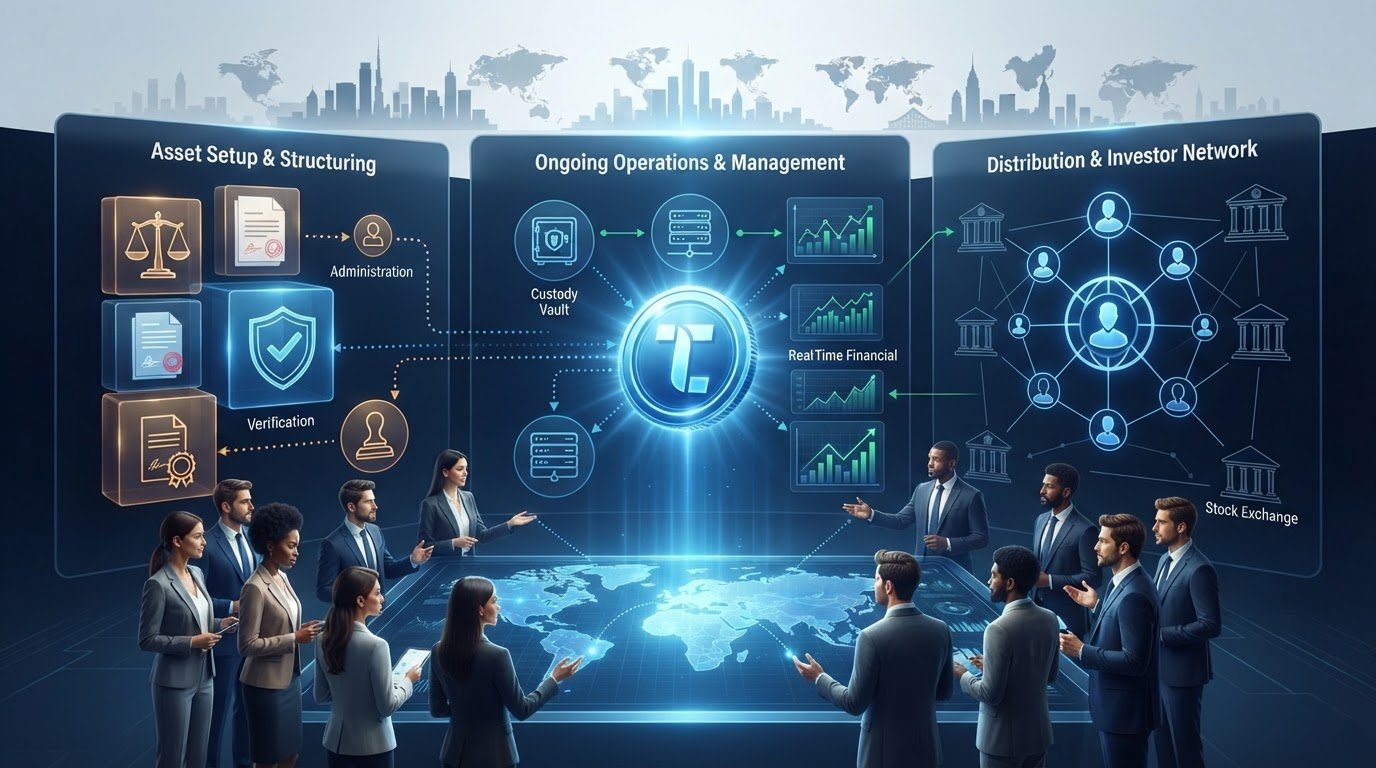
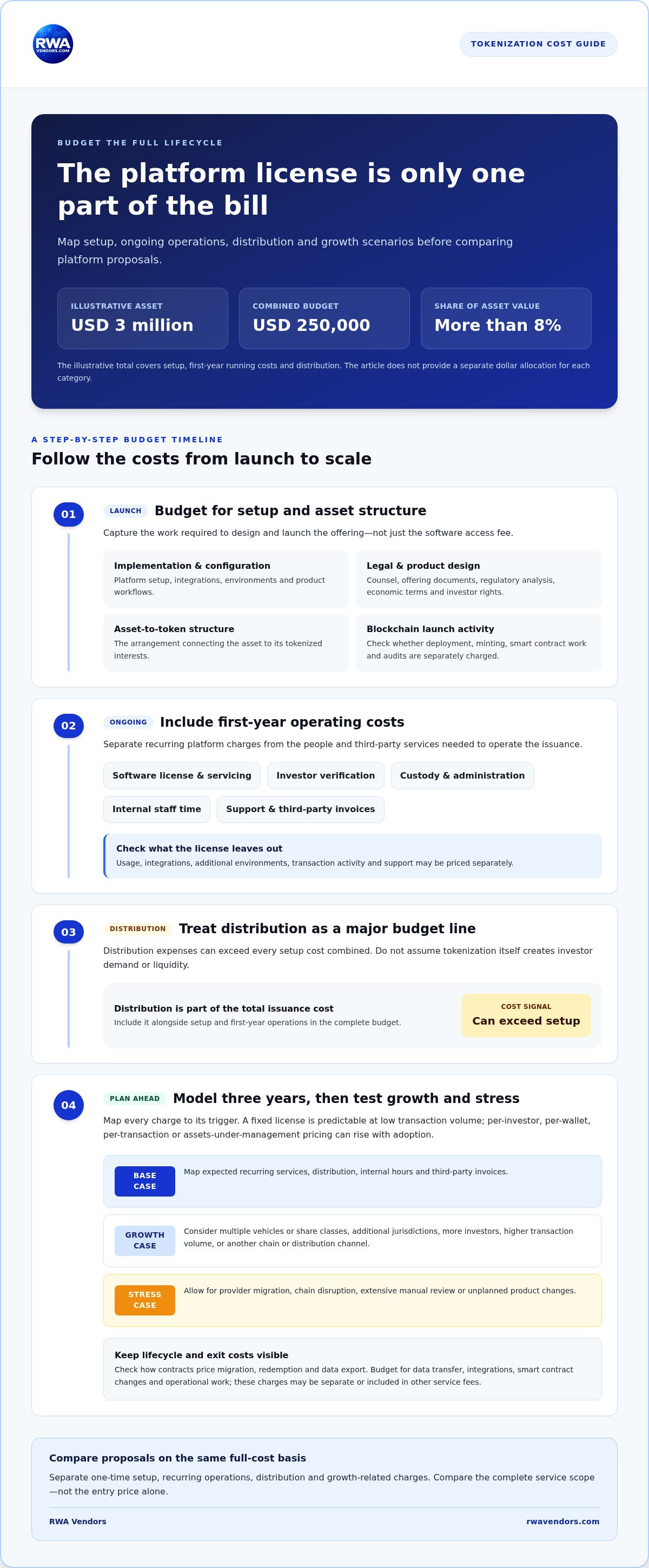
The platform license is rarely the whole bill. The hidden costs of tokenization platforms can push the full budget much higher: an illustrative budget for a USD 3 million asset totals USD 250,000 across setup, first-year running costs, and distribution, exceeding 8% of the asset’s value.
It’s reasonable to focus first on a platform’s fee, but implementation, legal work, investor verification, ongoing administration, and distribution can all add to the total. The final cost depends on the asset structure, jurisdictions, service requirements, customization, and scale, so there is no single price for every issuance.
This article explains where tokenization expenses arise, how recurring and distribution costs affect the full lifecycle budget, and how costs compare with traditional issuance. It also shows how to assess a platform proposal across setup, ongoing operations, and growth scenarios, so you can evaluate the complete cost picture instead of relying on an entry price alone.
Key Takeaways
- Build a three-year budget that separates setup, recurring operations, and distribution instead of relying on the platform’s entry price.
- Include legal work, investor verification, custody, administration, internal staff time, and support when estimating the full cost of an issuance.
- Distribution expenses can exceed combined setup costs, and tokenization does not automatically create investor demand or liquidity.
- Compare platform proposals using consistent categories, including implementation, licenses, usage, third-party services, overages, renewals, and exit assistance.
- Assess tokenization against traditional issuance by comparing the full scope of services and ongoing responsibilities, not technology fees alone.
Budgeting across setup, ongoing, and distribution expenses
How do hidden costs and pricing models compare across tokenization platforms? Pricing models vary: implementation, software licensing, servicing, and distribution may appear as separate charges.
Real estate platform budgets generally fall into three tiers.
The hidden costs of tokenization platforms can extend well beyond the entry price. Distribution expenses can exceed every setup cost combined. An illustrative USD 3 million asset budget totals USD 250,000 across setup, first-year running costs, and distribution, more than 8% of asset value.
Compare models by mapping each charge to what triggers it. A fixed license is predictable at low transaction volume, while pricing per investor, wallet, transaction, or assets under management can rise with adoption. A low entry price may exclude lifecycle events, environments, integrations, or support. Model base, growth, and stress cases over three years, including internal hours and third-party invoices.
What exit, migration, redemption, and data-export fees do tokenization platforms charge? There is no universal fee: contracts may price these activities separately or include them in other service charges. Treat migration as a budget line, including data transfer, integrations, smart contract changes, and operational work. Redemption costs also depend on the servicing and transaction structure.
Budget capacity for growth, not just launch. A growth case might involve multiple vehicles or share classes, additional jurisdictions, more investors, higher transaction volume, and another chain or distribution channel. A stress case could include provider migration, chain disruption, extensive manual review, or unplanned product changes. These assumptions reveal which expenses scale and which remain fixed.
Keep AI model spending separate from asset-tokenization expenses if the platform uses AI tools. Month-to-month AI spending swings of 30-50% or more can make quarterly reviews too slow to reveal changes. Review usage monthly and compare models against workload complexity, since a lower-cost model can become more expensive for complex tasks. Set flexible token budgets by workload, track consumption, and adjust limits as usage patterns change.
Use the hidden costs of tokenization platforms as a prompt to budget for the full operating lifecycle, not just software access. A clear cost model separates recurring services, growth-related charges, distribution, and internal work, giving decision-makers a more complete basis for comparing proposals.
What are the hidden costs of asset tokenization?
Legal design, operating structure, and blockchain activity can add costs beyond the platform invoice. Separate these expenses in the budget because their cost drivers differ from software licensing and distribution.
Legal and Asset Structuring Expenses
Legal and asset-structuring expenses may cover counsel, offering documents, and the arrangement connecting an asset to its tokenized interests. The work required depends on the asset class, offering structure, investor base, and jurisdiction.
When structuring a U.S. offering, compliance requirements shape the overall budget. These figures describe different structures, not interchangeable quotes, so model expected offering documents and counsel work separately.
Legal and Product Design Costs
Legal and product-design costs cover how an offering’s economic terms, investor rights, and operational processes are expressed in documents and platform workflows. Changes to those terms can require coordinated legal, product, and technology revisions.
Budget for regulatory analysis alongside product design rather than treating it as a final review. For example, the structure selected for a U.S. issuance affects its documents and investor eligibility process. Changes to share classes, transfer restrictions, or servicing workflows can also require revisions to legal materials and platform configuration. Record each deliverable and its owner to distinguish one-time design work from ongoing operational support.
Blockchain Network and Transaction Fees
Blockchain network and transaction fees are charges for activity on a chain, including smart contract deployment and token transactions. A platform’s pricing may cover software access without covering each network interaction. Gas costs can vary with network conditions and the operations performed, so a launch and a later transfer may have different fee profiles.
What blockchain gas, network, and transaction fees are not included in platform pricing? The answer depends on the service arrangement: network charges may be billed separately from the platform license, while transaction fees may be priced through another component. Identify who pays for deployment, minting, transfers, settlement, and contract updates, then model expected activity and exceptional transactions separately.
For providers serving tokenization issuers, a vendor directory listing can present relevant technology, legal, or compliance capabilities to businesses assessing the hidden costs of tokenization platforms.
How much does a tokenization platform cost?
Actual costs depend on whether an issuer licenses configurable software or funds custom infrastructure, then adds identity, custody, and administration services. Platforms may charge separately for smart contract development, audits, and deployment. After launch, manual review, support, migration, security incidents, chain disruption, or product changes can increase costs.
Platform Purchase or Custom Development
Licensing a platform means using existing technology; custom development means funding a system built around specific requirements. The choice affects both upfront spending and who takes responsibility for ongoing technical work.
Custom development may reduce license fees but shifts architecture, security, maintenance, compliance integration, and operational responsibilities to the buyer. A purchased platform can reduce the need to build core functions, though its actual cost depends on required integrations, usage, and support. Compare ownership, configuration limits, and continuing responsibilities, not just the initial charge.
Wallet, Custody, and Payment Integrations
Wallet, custody, and payment integrations connect token ownership records to access, safekeeping, and transaction functions. Their cost matters because each connection may involve implementation work beyond the platform license.
The actual scope depends on how investors access tokens, how ownership records interact with custody, and which payment workflows the issuer needs. Separate setup work from ongoing service charges, and account for transaction activity when comparing providers.
Custody and Ongoing Administration
Custody and administration cover asset servicing, ownership records, and recurring operational support. Platform access alone doesn’t perform every task required after issuance.
Identify which provider performs each function, then distinguish recurring administration from technical infrastructure and custody. More investors, reporting requirements, or complex servicing can expand the operational workload.
Smart Contract and Post-Launch Costs
Smart contract and post-launch costs cover development, independent review, deployment, and changes after issuance. They matter because contract functions must support the asset’s operating model and remain maintainable.
Tokenization platforms may bill these as separate project charges. After launch, provider migration, security incidents, chain disruption, high manual-review rates, and unplanned regulatory or product changes can add work. Include these scenarios in the cost model rather than treating deployment as the final expense.
KYC, AML, and accredited-investor verification costs
Ongoing expenses can include screening, investor onboarding, compliance reviews, exception handling, and reporting. Estimate them based on investor volume, verification depth, jurisdictional complexity, and the frequency of ongoing checks.
Jurisdiction and Investor Eligibility
Jurisdiction and investor eligibility determine the onboarding checks and verification workflows an offering needs. Adding investor locations can introduce different documentation, review, and recordkeeping processes.
For a U.S. These are distinct costs: identity screening establishes who an investor is, while accredited verification assesses eligibility for that offering. Include both in estimates when the structure requires both processes.
Complexity rises when an offering accepts investors across jurisdictions or uses different eligibility criteria. Map the intended investor base before estimating onboarding infrastructure. For example, one domestic investor pathway involves fewer workflow variations than an offering serving several jurisdictions. Each added pathway can affect document collection, review queues, exceptions, and record retention.
Compliance and Investor Onboarding
Compliance and onboarding expenses cover the systems and work used to screen investors, review submissions, and maintain records. A per-investor check is only one component of the full operating process.
Separate system setup from individual checks, then estimate how application volume affects manual review and support.
After onboarding, recurring work can include screening updates, resolving incomplete records, reviewing exceptions, and preparing investor reports. Budget for internal staff time as well as third-party charges. A process that automates routine checks may still require human review for mismatched documents or unusual cases. Higher exception volumes therefore increase operational effort, even when the initial technology setup stays unchanged.
Estimate distribution separately from verification. Investor acquisition can involve outreach, communications, and support throughout the offering, depending on the target investor base and distribution approach. Tokenization doesn’t itself create demand or liquidity. Model acquisition and servicing as operating work rather than assuming that issuing digital interests automatically brings investors.
For a practical estimate, separate costs into system setup, per-investor screening, eligibility verification, ongoing reviews, and distribution. Then test the estimate against a base case and a growth case with more investors or additional jurisdictions. This makes the effect of each added investor pathway visible and helps distinguish fixed infrastructure costs from charges that rise with volume.
Tokenization costs compared with traditional issuance
Compare tokenization with traditional issuance using the same asset, investor profile, jurisdiction, and service period. A lower technology invoice doesn’t establish a lower total cost: include legal work, administration, investor onboarding, distribution, and ongoing operations in both models. Identify which expenses each structure adds, removes, or shifts between providers and internal teams.
Tokenization introduces technology-specific expenses, including smart contract development, deployment, infrastructure, and security review. A professional smart contract audit is considered necessary, and skipping it to save money is a costly mistake. Traditional issuance doesn’t include those blockchain workstreams, but still requires a workable legal and operational structure. Compare equivalent deliverables rather than treating the contract or platform quote as the entire tokenization cost.
Scale changes the comparison. Fixed setup and legal costs represent a larger share of a USD 2 million offering than a USD 50 million offering, because those costs don’t shrink proportionally with a smaller raise. For each model, separate fixed charges from investor- or transaction-based expenses. This shows whether an issuance gains economic efficiency as volume grows, or whether recurring service requirements offset the difference.
Assess distribution on a like-for-like basis. Tokenization should not be assumed to create investor demand or liquidity; investor acquisition and servicing remain distinct workstreams. Compare the distribution plan, target investors, onboarding process, and ongoing communications under both structures. If one model relies on additional channels or more manual support, include those operational requirements in its cost scenario instead of attributing them to technology alone.
Use a lifecycle comparison rather than a launch-only estimate. Project both models across three years, with base, growth, and stress cases. A growth case can add investors, jurisdictions, transaction volume, or another distribution channel; a stress case can include provider migration, chain disruption, or unplanned product changes. Record internal staff hours alongside third-party invoices to capture work that never appears on a platform bill.
The practical takeaway is conditional: tokenization may change how issuance and servicing functions are delivered, but it doesn’t eliminate legal, compliance, administration, or distribution work. Compare the complete operating model, including technology and audit requirements, with the equivalent traditional issuance.
RWA Vendors: Vendor Directory Listing
RWA Vendors connects asset issuers with verified tokenization platforms and service providers, helping them identify partners across technology, legal, and compliance workstreams. Use its Vendor Directory Listing when your cost model is taking shape and you need to map providers involved in issuance, onboarding, custody, or ongoing operations.
Use the directory to compare relevant service categories for real estate, funds, securities, and other assets. A clearer view of listed vendor capabilities can help you align project requirements with the workstreams in your budget. Providers can also use a Vendor Directory Listing to present their services to issuers evaluating tokenization infrastructure.
For more information, contact RWA Vendors or visit rwavendors.com.
Move from Cost Estimates to a Clear Vendor Plan
A considered view of the hidden costs of tokenization platforms can shape more than a launch budget. It can help you define the capabilities your issuance requires, assign clear responsibilities, and evaluate how each provider fits your operating model. The next step is to turn those requirements into a practical vendor plan, with ownership for technology, compliance, administration, and investor distribution.
RWA Vendors connects asset issuers with verified tokenization platforms and service providers. Its Vendor Directory Listing, Founding Membership, and Lead Generation and Referrals support vendors seeking visibility and connections across the tokenization ecosystem. Issuers can use the directory to identify providers whose capabilities align with their project requirements.
Start a conversation with RWA Vendors about your role in the ecosystem.
A considered vendor plan gives your project a stronger foundation for informed decisions and coordinated execution.
Frequently Asked Questions
What is the most expensive part of tokenization?
Distribution, legal structuring, and ongoing servicing can each become the largest expense, depending on the offering. Distribution expenses can exceed combined setup costs, especially when investor acquisition requires sustained outreach and support. Compare the distribution plan with legal and technology work rather than assuming the platform build is automatically the largest cost. The highest expense depends on the asset, offering structure, investor base, and operating model.
Can tokenization save money versus traditional issuance?
Tokenization can reduce or reorganize some issuance work, but savings depend on the complete operating model. Compare equivalent services, including legal structuring, investor onboarding, administration, and distribution, across the same period. A smaller raise may carry a higher percentage cost because fixed expenses remain. Tokenization also doesn’t guarantee investor demand or liquidity, so assess potential efficiencies separately from fundraising outcomes and market access.
How Can Businesses Effectively Manage and Reduce Tokenization Costs?
Build a three-year cost model with base, growth, and stress scenarios, then assign each expense to a responsible team or vendor. Compare proposals using consistent categories: implementation, licensing, usage, third parties, support, overages, renewals, changes, and exit assistance. Include internal staff hours, not only invoices. For example, estimate how a new jurisdiction or investor class affects onboarding and reporting before adding it to the growth scenario.
What fees do tokenization platforms charge beyond setup and subscription costs?
Additional charges may cover smart contract development and audits, investor screening, custody or wallet integrations, transaction processing, administration, and support. Some proposals separate network activity, implementation changes, and exceptional servicing from the core license. Review the billing unit for each item, such as per transaction, investor, wallet, or asset. Also identify renewal, data-export, and migration terms so a future provider change doesn’t create an unplanned cost.
What are typical tokenization platform setup, transaction, and monthly fees?
These figures describe different pricing structures, so don’t combine them into one standard package.
What custody, wallet, and asset-servicing fees apply to tokenized assets?
Relevant expenses can include wallet and custody integration, transfer-agent services, and fund administration. Separate integration work from recurring services, then map each charge to the function and asset structure it supports.
What legal, compliance, and licensing costs are required for tokenization platforms in the United States?
Costs depend on offering structure, investor eligibility, legal work, and the regulated roles involved. For a U.S. Assess licensing and regulatory work in relation to the specific structure and service responsibilities rather than applying one blanket estimate.
What costs arise when integrating a tokenization platform with existing systems or third-party providers?
Integration costs arise from connecting identity checks, wallets, custody, payments, reporting, and existing investor or asset records. Each connection can require configuration, testing, data mapping, and operational coordination. The final scope depends on system compatibility, data quality, workflow complexity, and how many providers must exchange information or support the same transaction process.
Disclaimer
This article is provided by RWAVendors.com for general informational and educational purposes only. It does not constitute legal, financial, investment, tax, regulatory or other professional advice, or an offer, solicitation, recommendation or endorsement of any company, product, service, token, security or investment. RWAVendors.com is an informational vendor directory and does not sell, issue, broker, custody or facilitate transactions involving cryptocurrencies, digital tokens, tokenized assets, securities or investment products. Some vendor listings and references may involve paid advertising, sponsored placement or membership relationships. These relationships do not guarantee a vendor’s qualifications, regulatory status, performance or suitability. Information may be incomplete, outdated or subject to change. You should independently verify all information, conduct your own due diligence and consult qualified professionals before making any business or investment decision. RWAVendors.com is not responsible for the content, services, representations or actions of third-party vendors or linked websites.


