

A digital token does not, by itself, make a transfer legally effective or establish its priority. In the comparison of tokenization vs traditional securitization, investor acceptance depends on the rights attached to the investment and the structure supporting them. Perfection and priority depend on the applicable legal framework and required transfer steps, not simply on whether ownership appears on a blockchain or in conventional records. The format changes, but legal analysis remains central.
It is reasonable to expect tokenization to make transfers faster and broaden investor access. These features can matter, but they do not replace the need for investors to recognize the rights they receive or for transfers to be effective against relevant third parties. A well-designed digital record and a valid legal transfer are related, but they are not the same.
This article explains how investor acceptance differs between the two structures, what establishes and records a transfer, and how perfection and priority can affect the parties’ rights. It also outlines practical questions issuers and market participants should weigh when comparing a tokenized structure with traditional securitization, helping you assess where technology changes the process and where legal design still governs the outcome.
Key Takeaways
- Assess the underlying asset and the rights being transferred; a digital token alone doesn’t establish enforceability or priority.
- Compare costs and timelines by examining the legal structure, asset documentation, issuance process, and ongoing administration involved.
- Evaluate securities-law obligations based on the rights and offering structure, not simply whether records are maintained on a blockchain.
- Distinguish potential improvements in transfer and recordkeeping from actual liquidity, which also depends on investor acceptance and market infrastructure.
What assets can be tokenized or traditionally securitized?
The asset type alone does not determine whether tokenization or securitization is the better fit. A token can represent rights connected to real estate, funds, securities, or other assets. Traditional securitization instead organizes financial claims into an issuance structure, often using assets that generate payments. The distinction lies between the underlying asset or cash flow and the legal interest investors receive. For example, a token recording an interest in a building is not automatically the building itself or a direct transfer of ownership. The governing documents and transfer arrangements define what the investor holds.
In tokenized real estate, the structure may represent an interest tied to a property or an entity that holds it. Tokenized funds and securities likewise depend on the rights represented and how relevant records recognize transfers. A digital record can help identify holdings and transactions, but it does not independently establish the asset’s legal character. Issuers need to specify whether investors receive ownership, a contractual claim, or another economic interest. That answer affects how the asset is documented, transferred, and administered.
Traditional securitization is commonly associated with pools of payment-generating claims, rather than a digital representation of an individual asset. Mortgages, loans, and receivables illustrate the kind of cash flows that can be organized into securities. Utility tariff property provides a distinct example: Missouri law addresses securitized utility tariff bonds and related matters. According to the Missouri Revisor of Statutes, Sections 393.1700 to 393.1715 define rules for securitized utility tariff bonds and related matters. The structure centers on defined charges and financing rights, not token ownership of the utility’s physical infrastructure.
The Missouri example also shows why the legal category of an asset matters. According to the Missouri Revisor of Statutes, Section 393.1700 is effective August 28, 2025. A qualifying tariff-related financing structure is not interchangeable with a property-backed or receivables-backed transaction. The asset’s source, payment mechanism, documentation, and applicable rules shape what can be transferred and how investors’ interests are described. Technology can change how records are maintained, but it doesn’t convert one legal asset category into another.
Eligibility can also depend on the customer or claim involved. The Missouri Public Service Commission says a customer receiving electricity under a qualifying commission-approved market-based tariff, with a load of at least 80 megawatts, may qualify for exemptions from specified securitized utility tariff charges. That example concerns specified charges, not a general threshold for securitizing assets. In practice, compare the asset’s cash flows, ownership structure, investor rights, and governing framework before selecting an issuance format. Those features determine whether tokenization, traditional securitization, or a structure combining elements of both is suitable.
What are the costs and timelines for tokenization versus traditional securitization?
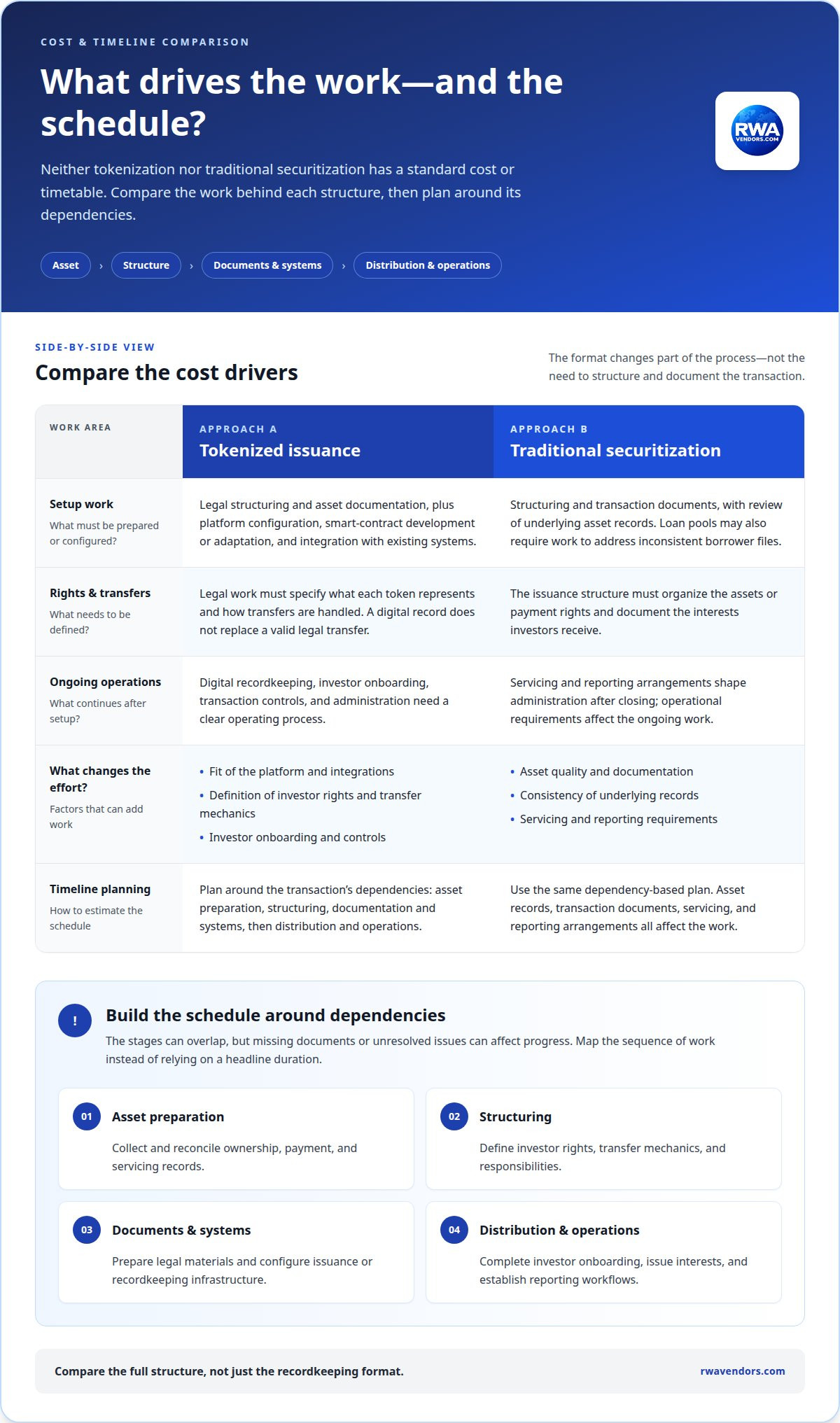
Neither format has a standard cost or timetable. The work depends on the asset, transaction structure, investor rights, service providers, and operating model. A tokenized issuance still requires legal structuring, asset documentation, technology, investor onboarding, and administration. Traditional securitization also requires its own structuring, documentation, and operational arrangements. Replacing paper records with a digital ledger changes part of the process, not the entire transaction.
Compare costs by separating setup work from ongoing obligations. For a tokenized issuance, account for platform configuration, smart-contract development or adaptation, integration with existing systems, and digital recordkeeping. Legal work must define what each token represents and how transfers are handled. Investor onboarding and transaction controls also need a clear process. Even when an issuer uses an existing platform, integration and configuration must fit the asset and rights structure.
Traditional securitization costs reflect the work involved in organizing assets or payment rights into an issuance. For a loan pool, for example, the parties need to review underlying records, prepare transaction documents, and arrange servicing and reporting. Asset quality and documentation affect the effort required. A pool with inconsistent borrower files may need more remediation than one with standardized records. Operational requirements also shape administration after closing.
Build a timeline around dependencies rather than a headline duration. The main stages generally include:
- Asset preparation: collect and reconcile ownership, payment, and servicing records.
- Structuring: define investor rights, transfer mechanics, and responsibilities.
- Documentation and systems: prepare legal materials and configure the issuance or recordkeeping infrastructure.
- Distribution and operations: complete investor onboarding, issue interests, and establish reporting workflows.
These steps can overlap, but missing documents or unresolved rights can delay later work in either model. A token platform cannot resolve conflicting property records, just as conventional issuance systems cannot remove the need to clarify asset ownership.
Make a like-for-like comparison. For example, compare a tokenized fund interest with a conventional fund interest, including legal design, investor eligibility processes, transfer controls, record reconciliation, and ongoing administration. Then separate one-time implementation work from recurring operating needs. If the tokenized model requires parallel records or manual reconciliation, include those tasks in the cost and timeline assessment.
For issuers evaluating platform and professional-service needs, a directory of tokenization vendors can help map the capabilities involved in an implementation. Compare each proposed scope against the same asset, rights, operational requirements, and launch dependencies. That gives decision-makers a clearer basis for evaluating total effort, rather than treating digital issuance as an automatic shortcut.
What U.S. securities laws and regulations apply to tokenized assets and securitizations?
In the United States, assess the rights offered, the issuer, and the transaction before determining regulatory treatment. A blockchain entry does not, by itself, determine whether an investment is treated as a security. For example, a token representing an economic interest in a real estate entity differs from a record used only to track an asset. The legal documents and actual rights are the starting point for compliance review. A comparison of tokenization vs traditional securitization therefore begins with the same core question: what rights does the investor receive?
For a tokenized offering, examine how investors acquire interests, what claims those interests create, and how transfers work. A token may represent an ownership interest, a contractual payment claim, or another arrangement. These distinctions shape the questions raised by the offering. The technical format cannot replace clear definitions of investor rights, issuer obligations, and the process for maintaining ownership records.
- Offering structure: identify the issuer, the interest offered, purchaser eligibility, and distribution method.
- Intermediary activity: map the roles of platforms and other participants involved in offering, transfer, or transaction services.
- Asset and payment rights: document what supports investor claims, such as fund interests, loan payments, or property-related proceeds.
- Transfer and records: align the governing documents, official ownership records, and technology workflow.
Traditional securitization raises related questions through its own transaction structure. For a pool of receivables, review how assets are transferred, how payment rights are allocated, and how servicing continues. The offering documents should describe investors’ interests and the cash flows supporting them. In tokenization vs traditional securitization, the frameworks may differ, but both structures require a clear account of investor entitlements and transaction roles.
State-level rules can also matter, especially when an asset or payment mechanism has a specific statutory framework. Missouri provides an example through its rules for securitized utility tariff bonds. This is distinct from a general token offering because it concerns a defined utility-financing structure. Identify the asset’s jurisdiction and any specialized framework before applying one transaction’s analysis to another.
For a U.S. transaction, organize the review around the complete structure, not the platform’s marketing description. Map each participant’s role, identify the legal issuer, define investor entitlements, and reconcile digital records with the records recognized by the transaction documents. A tokenized fund interest and a securitized receivables pool may use similar technology but raise different questions because their assets, payment arrangements, and investor claims differ. This structured analysis helps issuers identify the legal and compliance work relevant to issuance.
How do issuance, trading, settlement, and ownership records differ between the two approaches
Issuance starts with the rights established in the transaction documents. In a tokenized structure, an issuer creates digital units on a selected ledger and links them to those rights. For example, tokens may represent a fund interest while offering documents define investor entitlements. In traditional securitization, the issuer creates securities under transaction documents, then records investor positions through the relevant securities infrastructure. In neither format does the technology itself create investor rights.
Trading depends on how each structure allows interests to move between holders. A token platform can support transfers through ledger transactions, subject to its permissions and controls. A transfer by an approved participant may update the on-chain record, while restrictions may prevent transfers that do not meet platform rules. Conventional securities often move through intermediaries and account records. In either model, a ledger entry or account update must align with the transfer rights set out in the governing documents.
Settlement also follows the chosen operating design. A tokenized transaction can combine transfer instructions and payment logic in a shared digital workflow. For example, a system may coordinate delivery of a token with payment confirmation. Traditional settlement commonly involves coordinated instructions among trading, clearing, custody, and payment participants. The practical distinction is how records and instructions interact, not an automatic guarantee that one method settles faster or removes operational risk.
Ownership records need particular care. A token ledger can show which wallet holds a unit, but the legal framework must explain what that record means. The issuer may also maintain an investor register or other authoritative records. In a conventional structure, an intermediary’s account statement may show a beneficial position, while other records identify the registered holder. These layers make reconciliation important, especially when a transfer, correction, or corporate action affects investor entitlements.
- At issuance: match each digital unit or security to the documented rights it represents.
- During trading: define who can transfer, what controls apply, and how rejected transfers are handled.
- At settlement: align payment confirmation with delivery records and transaction status.
- For ownership: identify the authoritative record and reconcile it with platform, intermediary, and issuer records.
A practical comparison traces one transaction from allocation through resale. For a tokenized real estate interest, identify how the initial holder receives units, how an eligible transfer is recorded, and which register governs ownership. For a conventional mortgage-backed security, map the investor position through the relevant intermediary records and servicing workflows. Then test exceptions, such as a failed payment or incorrect account entry. This exercise shows whether each system has clear controls, evidence, and responsibility for correcting records.
What are the liquidity and investor-access benefits of tokenization compared with traditional securitization
Tokenization can make ownership units easier to divide and transfer through digital systems. For a real estate interest, an issuer could represent defined interests as digital units rather than relying solely on conventional records. Smaller units may make allocation more flexible, but they do not create buyers or active trading. Liquidity still depends on investor demand, transfer rules, reliable records, and functioning trading arrangements.
Traditional securitization can also support investor access by pooling assets and issuing interests linked to their cash flows. For example, a mortgage-backed security gives investors exposure through an established security structure rather than ownership of individual homes. Distribution depends on the transaction design and the channels available to investors. Tokenization changes how interests may be represented and transferred, not the underlying asset quality or the appeal of the economics.
Digital infrastructure may broaden how investors discover and transact in an offering. A platform could present issuance information, manage permitted transfers, and record holdings in a connected workflow. For a fund interest, that may make positions easier to see than when separate records are maintained across different systems. The practical benefit depends on whether investors can access the platform, understand their rights, and use compatible payment and custody arrangements.
Investor access is a matter of distribution design, not token format alone. Issuers should identify intended investor groups, participation conditions, onboarding processes, and transfer permissions. A tokenized interest restricted to a narrow group of eligible holders may offer no broader access than a conventional security. Conversely, a well-designed digital distribution channel may make subscriptions and transfers more convenient for its intended participants.
- Assess liquidity: identify likely buyers, transfer restrictions, and available trading arrangements.
- Assess access: map investor eligibility, onboarding requirements, and distribution channels.
- Assess operations: confirm how records, payments, and transfers work together.
Compare a tokenized fund interest with a traditionally issued fund interest by asking the same questions: who can invest, how holders receive information, and how a resale is recorded. Then examine whether any digital transfer route connects to actual demand and reliable settlement. For securitized assets, consider whether the existing security structure already reaches the intended investors. The relevant advantage is an improvement to a specific transaction, not a general promise of greater liquidity.
Issuers assessing distribution and infrastructure needs can explore providers for real-world asset tokenization, including technology and professional services that support investor access.
RWA Vendors: Vendor Directory Listing
RWA Vendors connects asset issuers with verified tokenization platforms and service providers. Its Vendor Directory helps issuers identify technology, legal, compliance, and tokenization vendors relevant to their projects. Use the directory when comparing capabilities for structuring and supporting tokenized real estate, funds, securities, or other assets. It can help narrow the search across provider categories, but does not replace decisions about a transaction’s legal structure or investor rights. Issuers can map project requirements to relevant vendor expertise, from platform infrastructure to professional services. For businesses building in tokenized capital markets, this is a practical next step after assessing transfer mechanics and investor access. Visit rwavendors.com to explore the directory.
Turn your transfer-rights analysis into a project plan
The decision between tokenization and traditional securitization becomes actionable when your team translates it into project requirements. Define the rights to be transferred, the records that will evidence ownership, and the operational roles needed to maintain them. Then compare provider capabilities against those requirements instead of choosing technology before the structure is clear. This gives legal, compliance, technology, and business teams a shared basis for evaluating the next step. The tokenization vs traditional securitization analysis is most useful when it informs specific decisions about implementation, partners, and operating responsibilities.
RWA Vendors helps asset issuers discover verified tokenization platforms and service providers relevant to their needs. Use the directory to keep mapping project requirements to the capabilities needed for execution.
A well-defined project brief is a stronger starting point for evaluating the right structure and building a capable provider network.
Frequently Asked Questions
What is asset tokenization and how does it work?
Asset tokenization represents defined rights connected to an asset or entity through digital units recorded on a blockchain or similar ledger. The issuer specifies what each unit represents, such as an interest in a property-holding company or a claim to payments. Offering documents describe those rights, while issuance records show which investors hold the units. Distribution processes can also explain how investors subscribe, receive notices, and obtain payments tied to their interests.
What is traditional securitization and how does it work?
Traditional securitization organizes financial assets or payment claims into a structure that issues securities to investors. For example, a transaction may pool loan receivables, transfer them into a financing structure, and issue securities supported by the pool’s cash flows. Servicing processes collect payments and allocate them according to the transaction documents. Investors hold rights defined by those documents, while intermediaries and established records support issuance, ownership tracking, and administration.
How do tokenized securities differ from traditional securitized products?
Tokenized securities use digital tokens and ledger records to represent investor interests; traditional securitized products generally rely on conventional securities documentation and recordkeeping infrastructure. The main distinction is representation and operation. For instance, a tokenized fund interest may be recorded digitally, while a securitized loan product represents claims associated with a pool of payments. In either case, the documents define investor rights; the label or record format alone does not.
What are the legal, operational, cybersecurity, and smart-contract risks of tokenization?
A token alone does not establish an enforceable transfer or priority. These depend on the rights, governing documents, legal framework, and required transfer steps. Operational challenges can include missing or inconsistent asset records, unresolved rights, and parallel records or manual reconciliation. The material provides no specific basis for describing cybersecurity or smart-contract risks.
Disclaimer
This article is provided by RWAVendors.com for general informational and educational purposes only. It does not constitute legal, financial, investment, tax, regulatory or other professional advice, or an offer, solicitation, recommendation or endorsement of any company, product, service, token, security or investment. RWAVendors.com is an informational vendor directory and does not sell, issue, broker, custody or facilitate transactions involving cryptocurrencies, digital tokens, tokenized assets, securities or investment products. Some vendor listings and references may involve paid advertising, sponsored placement or membership relationships. These relationships do not guarantee a vendor’s qualifications, regulatory status, performance or suitability. Information may be incomplete, outdated or subject to change. You should independently verify all information, conduct your own due diligence and consult qualified professionals before making any business or investment decision. RWAVendors.com is not responsible for the content, services, representations or actions of third-party vendors or linked websites.


