

A platform’s tokenization label doesn’t explain who can participate or what support it provides. Tokenized fundraising platforms vary in their services, regulatory status, and verification details. In the US and most Western countries, regulation could restrict non-accredited investors from participating in security-token sales. Because security tokens are digital securities built on blockchain infrastructure, evaluating an offering means looking beyond the technology.
A platform may make fundraising processes more organized, but its technology, compliance support, and verification details are separate considerations. This guide explains how to assess those differences, what regulatory status can mean for access, and which verification details clarify a platform’s role. It also outlines key service categories to help you identify the capabilities relevant to your project.
Key Takeaways
- Separate a platform’s technology and service scope from its regulatory status and the verification evidence it provides.
- In the US and most Western countries, regulation could restrict non-accredited investors from participating in security-token sales.
- Identify which capabilities a fundraising campaign needs, from tokenization technology to compliance, custody, and payment support.
- Plan a campaign in stages, aligning its structure, platform capabilities, and operational requirements before launch.
- Assess platform, legal, and compliance costs by examining the project’s structure and required services rather than relying on a single standard price.
Platform regulation and verification status
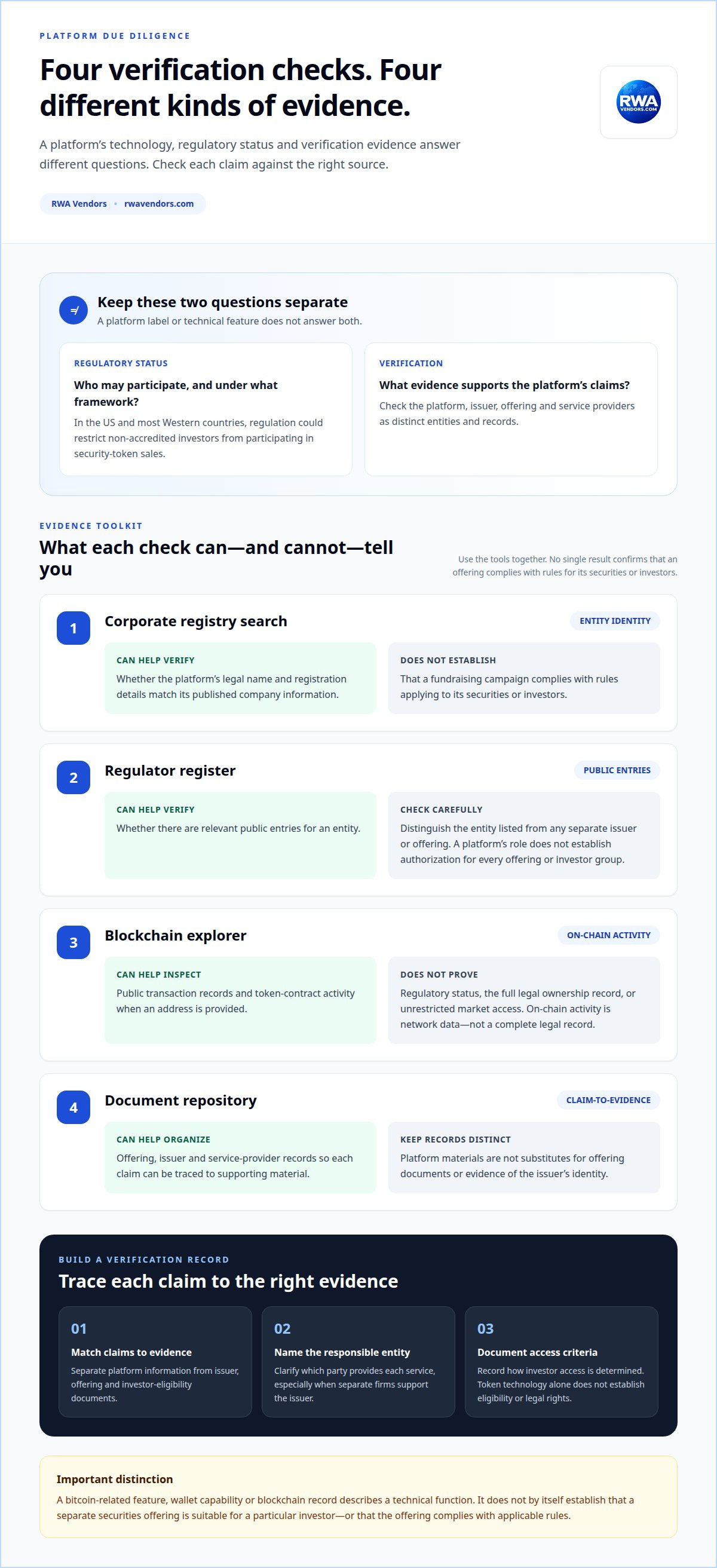
Regulatory status and verification answer different questions. Regulation concerns the legal framework relevant to an offering and its participants. Verification concerns the evidence supporting claims about a platform, issuer, and services. In the US and most Western countries, regulation could restrict non-accredited investors from participating in security-token sales. Those rules can shape participation, fundraising structure, and the investors a campaign can reach.
Start by identifying the platform’s role. It may supply tokenization infrastructure, coordinate fundraising, or provide access to other ecosystem services. Those functions don’t establish that the platform itself is authorized for every securities offering or investor group. Security tokens are digital securities built on blockchain infrastructure, and the security-token offering market was born in 2018. A token’s technical form alone doesn’t establish the rights attached to it. Security tokens do not typically carry legal or enforceable rights to company revenue.
Next, assess the evidence behind the platform’s identity and claims. Distinguish materials about the platform from documents about the issuer, offering, and investor eligibility. A platform profile may describe its network, wallet support, or crypto capabilities, but these details aren’t substitutes for offering documents or evidence of the issuer’s identity. A bitcoin-related feature, for example, describes a technical capability; it doesn’t establish that a separate securities offering is suitable for a particular investor.
Use practical verification tools for distinct checks:
- Corporate registry search: compare the platform’s legal name and registration details with its published company information.
- Regulator register: look for relevant public entries, then distinguish the entity listed from any separate issuer or offering.
- Blockchain explorer: inspect a public transaction or token contract when an address is provided; on-chain activity doesn’t prove regulatory status.
- Document repository: organize offering, issuer, and service-provider records so each claim can be traced to its supporting material.
Different tools serve different purposes. A registry can help identify the legal entity operating under a platform name, while a blockchain explorer can show recorded network activity. Neither independently confirms that a fundraising campaign complies with rules applying to its securities or investors. Treat each result as one part of a broader evidence set.
Start building a verification record before promoting a crowdfunding or token-issuance campaign. Match each claim to evidence, identify the entity responsible for each service, and document how investor access is determined. Changes to a tokenized portfolio, wallet functions, or infrastructure may affect the platform description, but they don’t replace legal review of the offering. This process helps distinguish documented capabilities from promotional claims.
Tokenization platform services
A tokenization platform may combine blockchain infrastructure with services for issuing, administering, and transferring digital representations of assets. An equity project might need token creation and ownership records; another project may require investor onboarding, payment processing, or reporting. These capabilities can help organize fundraising, but they don’t determine an asset’s value or guarantee liquidity. Compare the services offered with the project’s capital-raising model.
Separate core technology from supporting services. Smart-contract functions can define how tokens are issued and transferred. Investor onboarding tools can collect information and manage access criteria, including accredited-investor eligibility where applicable. A platform may also connect issuers with custody, compliance, payment, or legal providers. Clarify each party’s role, especially when a decentralized network handles transactions and separate firms support the issuer.
- Token issuance tools: create token records and configure permitted functions for assets such as fund interests or real estate participation.
- Smart-contract testing tools: review contract behavior before launch, including transfer conditions and administrative controls.
- Blockchain explorers: inspect public transaction records and contract activity; they show network data, not the full legal ownership record.
- Investor onboarding systems: organize identity and eligibility workflows for participants across relevant countries.
- Custody wallets: support the safekeeping and movement of digital assets, with the custody model shaping who controls access.
Tokenized fundraising carries risks for both issuers and investors. Issuers need to manage platform dependencies, recordkeeping, and the relationship between token functions and rights described in offering documents. Investors may face limited liquidity, technology failures, or difficulty interpreting ownership rights.
After a fundraising round, tokenized securities are generally recorded on a blockchain and held through compatible wallets or custody arrangements. Transfers and trading depend on the token’s design, platform support, and applicable participation limits. An on-chain transfer alone doesn’t establish unrestricted market access.
A real-estate venture seeking capital might use token issuance and investor onboarding, while a fund may prioritize ownership records and reporting. The right combination depends on the asset, intended investors, and services provided by each vendor. A cap-table or token-holder system helps organize ownership data; a blockchain explorer helps inspect transaction history. Neither replaces the project’s source documents. Before launch, assign each function to a responsible party and consult qualified legal and compliance professionals about the offering structure. This makes service gaps visible and helps assess how blockchain technology fits the project.
Which tokenized fundraising platforms are available in the United States?
US companies may encounter several types of platforms: tokenization infrastructure providers, securities issuance platforms, and crowdfunding services. These categories describe different functions, not interchangeable products. One provider may focus on creating and administering digital securities, while another organizes an online campaign and investor access. The right fit depends on the asset, fundraising structure, investor base, and services required.
Availability depends on the offering and intended participants. A platform’s presence in the US doesn’t establish that every campaign can accept every investor. Assess the issuer, offering structure, and platform role together. Distinguish the technology provider from any other firm responsible for investor onboarding, compliance, custody, or payments.
Instead of treating platform names as a single ranked list, compare providers by operating model:
- Issuance infrastructure: supports token creation, smart-contract functions, and digital ownership records.
- Fundraising portals: organize campaign materials, investor onboarding, and subscriptions for a defined offering.
- Service networks: connect issuers with technology, legal, compliance, custody, or payment providers.
- Crowdfunding platforms: focus on online fundraising workflows; the directory’s youngest listed crowdfunding platform was founded in 2023.
Use discovery tools to narrow your research. SEC EDGAR can help locate company filings and offering-related documents, while a corporate registry search can help match a provider’s legal name to its public profile. A blockchain explorer can help inspect publicly viewable token-contract activity. None of these tools alone establishes that a platform supports a particular campaign or participant group. Treat each as one source of information.
A real-estate issuer may need token issuance, investor onboarding, and ownership-record support. A fund issuer may prioritize investor administration and reporting alongside token infrastructure. Compare each provider’s stated role with the campaign’s actual needs, then assign each function to a responsible party. This avoids mistaking a technology platform for a complete fundraising operation.
Availability can change as platforms expand services, supported assets, and investor workflows. The directory’s 2023-founded crowdfunding example illustrates why a fixed list can age quickly. For a current US shortlist, organize potential providers by service category, relevant asset type, and investor access model. Then assess platform documentation and supporting tools against the project’s requirements, rather than choosing by brand visibility alone.
Options include tokenization infrastructure providers, securities issuance platforms, fundraising portals, service networks, and crowdfunding platforms. Availability depends on the offering and intended participants. A platform’s US presence doesn’t mean it can serve every campaign or investor group.
For token-based offerings, include the token’s stated purpose in your comparison. A utility token’s value is tied to the value of the service for which it is used. Ask whether the campaign concerns access to a service, digital ownership records, or an investor subscription, and whether the platform’s stated role matches that purpose. Consider separately whether the platform can provide the other functions the issuer needs.
When comparing providers, describe the intended services and fundraising structure in plain terms, then check each provider’s stated role against those needs. Note which functions the platform handles and which require another firm. This helps reveal gaps in the proposed arrangement without assuming that a platform’s technology or market presence establishes its suitability for the campaign.
How can a company launch a tokenized fundraising campaign step by step?
A company can organize a tokenized fundraising campaign through a sequence of decisions, documentation, and technical preparation. A real-estate issuer, for example, needs to define the asset and investor rights before configuring tokens. The following steps help align the offering, service providers, and blockchain operations before launch.
- Define the fundraising objective. Specify the asset, intended use of capital, target investor group, and proposed ownership structure. A fund raising for a defined portfolio may require different administration than a company issuing equity-linked interests. Record the project’s goals and constraints in a planning document.
- Determine the offering structure. Work with qualified legal and compliance professionals to assess the proposed securities, investor eligibility, and relevant jurisdictions. US and international participation can raise different considerations. Document the decisions that shape campaign access before creating promotional materials or accepting subscriptions.
- Map required services. List each operational function, such as token issuance, investor onboarding, payment processing, custody, reporting, and ongoing administration. Assign each task to a responsible provider. A service-mapping spreadsheet helps reveal gaps, overlapping roles, and dependencies between technology and professional services.
- Select technical infrastructure. Match the blockchain network and token functions to the offering’s transfer, recordkeeping, and administration needs. A smart-contract development environment can support implementation and testing. A test network helps teams review contract behavior before deployment, while a blockchain explorer can inspect public transactions afterward.
- Prepare issuer and offering materials. Assemble the documents needed to explain the issuer, asset, proposed rights, risks, and campaign process. A secure data room can organize approved versions and control access. Keep token descriptions consistent with source documents so investors can understand how digital records relate to the stated ownership structure.
- Test investor workflows before launch. Run a sample subscription from onboarding through payment, allocation, and record updates. A test account can expose unclear instructions or process failures. Confirm that support teams understand escalation paths and that the relevant records reflect each completed transaction.
For a fund campaign, a cap-table or investor-record system can track allocations, while reporting tools can organize ongoing communications. These systems serve different purposes: the blockchain records network activity, while issuer records and offering documents explain administrative and ownership details. Reconcile them through a defined operating process.
Launch only after the issuer, professional advisers, and platform teams agree on responsibilities and campaign materials. Establish a process for corrections, investor inquiries, and post-issuance updates. This coordination helps keep the technical workflow aligned with the campaign’s documented terms.
What are typical platform, legal, and compliance costs for tokenized fundraising?
There is no single typical total cost for a tokenized fundraising campaign. The budget depends on the asset, offering structure, investor workflow, technology scope, and jurisdictions involved. A real-estate issuer may need different services from a fund issuer. Build the budget by separating platform charges from legal, compliance, and ongoing operating expenses.
Platform pricing depends on the functions a provider supplies. A proposal may cover token issuance, smart-contract configuration, investor onboarding, payment processing, custody coordination, or reporting. Some projects need selected infrastructure; others require several connected services. Compare proposals by function and billing basis, such as implementation work, platform access, transaction activity, or ongoing administration. A broad package label isn’t a complete cost breakdown.
Legal expenses depend on the offering structure, issuer documents, investor eligibility, and jurisdictions involved. Counsel may review how the token relates to stated ownership rights, prepare or revise offering materials, and assess campaign communications. For a US-focused offering, participant eligibility and securities treatment can shape the analysis. Campaigns involving investors in other countries may require additional jurisdiction-specific work.
Compliance costs also depend on operational scope. Identity and eligibility workflows, record retention, transaction monitoring, investor communications, and ongoing reporting can require different people and systems. The vendor mix varies depending on who manages onboarding and other workflows. Assign each task to a responsible party before comparing budgets.
Use practical tools to make estimates comparable:
- Cost worksheet: separates one-time implementation, recurring access, transaction-based charges, and professional services.
- Scope matrix: maps each service, such as custody or reporting, to its supplier and expected billing basis.
- Scenario model: compares project configurations, such as one investor workflow versus multiple jurisdictions.
- Invoice tracker: records actual spending against the approved budget as work progresses.
A fund launching with investor onboarding, token issuance, and ongoing reporting should list each function separately. Record assumptions beside each estimate, including which services are included, what triggers additional work, and which tasks remain with the issuer. This makes gaps and overlapping scopes easier to identify before commitments are made.
For any quoted service, the price depends on the case and is given after a quote request; cost factors include scope, asset type, jurisdictions, and required integrations. Keep campaign expenses distinct from fees charged for directory or vendor services.
Providers serving tokenized fundraising projects can use a vendor listing to present their capabilities to issuers.
RWA Vendors: RWA Vendors connects asset issuers with verified tokenization platforms and service providers
RWA Vendors connects asset issuers with verified tokenization platforms and service providers. Once you’ve defined your fundraising requirements, use its directory to identify relevant providers across the tokenization ecosystem.
Search for companies that help tokenize real estate, funds, securities, and other assets. The directory includes technology, legal, compliance, and tokenization vendors, helping issuers explore providers for different project needs. It supports discovery and connections, while legal and fundraising decisions remain with the project.
Explore the RWA Vendors directory to find providers relevant to your asset tokenization project.
Turn your platform shortlist into a clear next step
Use your project requirements to guide a focused search for tokenized fundraising platforms. A useful shortlist reflects the asset, operating model, and provider capabilities your team needs. Then identify which provider relationships and services can support your next planning stage.
RWA Vendors connects asset issuers with verified tokenization platforms and service providers. Its Vendor Directory Listing, Founding Membership, and Lead Generation and Referrals help providers build visibility and connections across the tokenized asset ecosystem. For issuers, the directory helps identify companies working with real estate, funds, securities, and other assets.
Take the next step with a clear view of your project’s priorities, then explore the provider connections that fit your direction.
A focused search can turn a complex provider landscape into a more actionable path forward.
Frequently Asked Questions
What are tokenized fundraising platforms and how do they work?
Tokenized fundraising platforms use digital infrastructure to support fundraising involving assets represented by blockchain-based tokens. The issuer defines the offering and its terms, while platform services may support issuance, investor administration, and transaction records. A fund, for example, may use tokens to maintain digital records of investor interests. The token’s functions and offering documents together explain what participants receive and how the process works.
How do these platforms compare on fees, minimums, and supported assets?
Compare tokenized fundraising platforms by service scope, pricing structure, participation thresholds, and supported asset types. A proposal may separate implementation, ongoing access, transaction activity, and optional services, while minimums depend on the specific offering. Depending on platform capabilities, supported assets can include real estate, funds, securities, or other assets. Build a side-by-side comparison using the same project requirements, so the differences reflect comparable services rather than package names.
What types of fundraising can tokenized platforms support, such as equity, debt, or real estate?
Platforms may support fundraising involving equity, debt, funds, or real estate, depending on their technology and the offering structure. A real-estate project might represent defined participation interests, while a debt offering may track obligations through token records. The token alone doesn’t establish the rights involved. Review the offering documents to understand the issuer’s commitments, distribution terms, and how each token relates to the underlying asset.
What due diligence should investors perform before investing through a tokenized fundraising platform?
Investors should examine the issuer, offering documents, platform role, custody arrangement, and available transfer process. Compare promotional claims with the formal description of rights and risks. If materials describe revenue participation, for example, confirm that the offering documents explain how distributions work. Also understand how ownership records are maintained and what procedures apply to account access, transfers, and investor communications after fundraising closes.
Disclaimer
This article is provided by RWAVendors.com for general informational and educational purposes only. It does not constitute legal, financial, investment, tax, regulatory or other professional advice, or an offer, solicitation, recommendation or endorsement of any company, product, service, token, security or investment. RWAVendors.com is an informational vendor directory and does not sell, issue, broker, custody or facilitate transactions involving cryptocurrencies, digital tokens, tokenized assets, securities or investment products. Some vendor listings and references may involve paid advertising, sponsored placement or membership relationships. These relationships do not guarantee a vendor’s qualifications, regulatory status, performance or suitability. Information may be incomplete, outdated or subject to change. You should independently verify all information, conduct your own due diligence and consult qualified professionals before making any business or investment decision. RWAVendors.com is not responsible for the content, services, representations or actions of third-party vendors or linked websites.


